Eating well is the “science of creating health versus treating disease.”
Dr. Mark Hyman
Hi! I’ve always known the value of buying healthy food, but not without a tinge of disappointment due to the fact that we can’t avoid: eating well costs more. But recently, thanks to Dr. Mark Hyman, my perspective has begun to shift. Dr. Hyman says in considering the cost of avoiding eating well, “Every $1 we spend on [industrialized] food, we spend $3 in collateral damage to our health.” Keeping this simple 1:3 ratio in mind, I’d love to spend some more time diving into budgeting tips and food swaps with you!
First, it also helps to consider a little more closely the cost of avoiding eating well.
From a medical standpoint, Dr. Casey Means states, “adults with obesity experience 100% higher annual medical care costs.”
And at work, “adults with obesity are 1.4 times higher to be absent from work.”
A Few More Simple Budgeting Tips on a Clean Food Diet:
Buy frozen fruits and vegetables
They’re 50% cheaper and last 10 times as long!
Buy your staples in bulk
Yearly, you could save $300-$600.
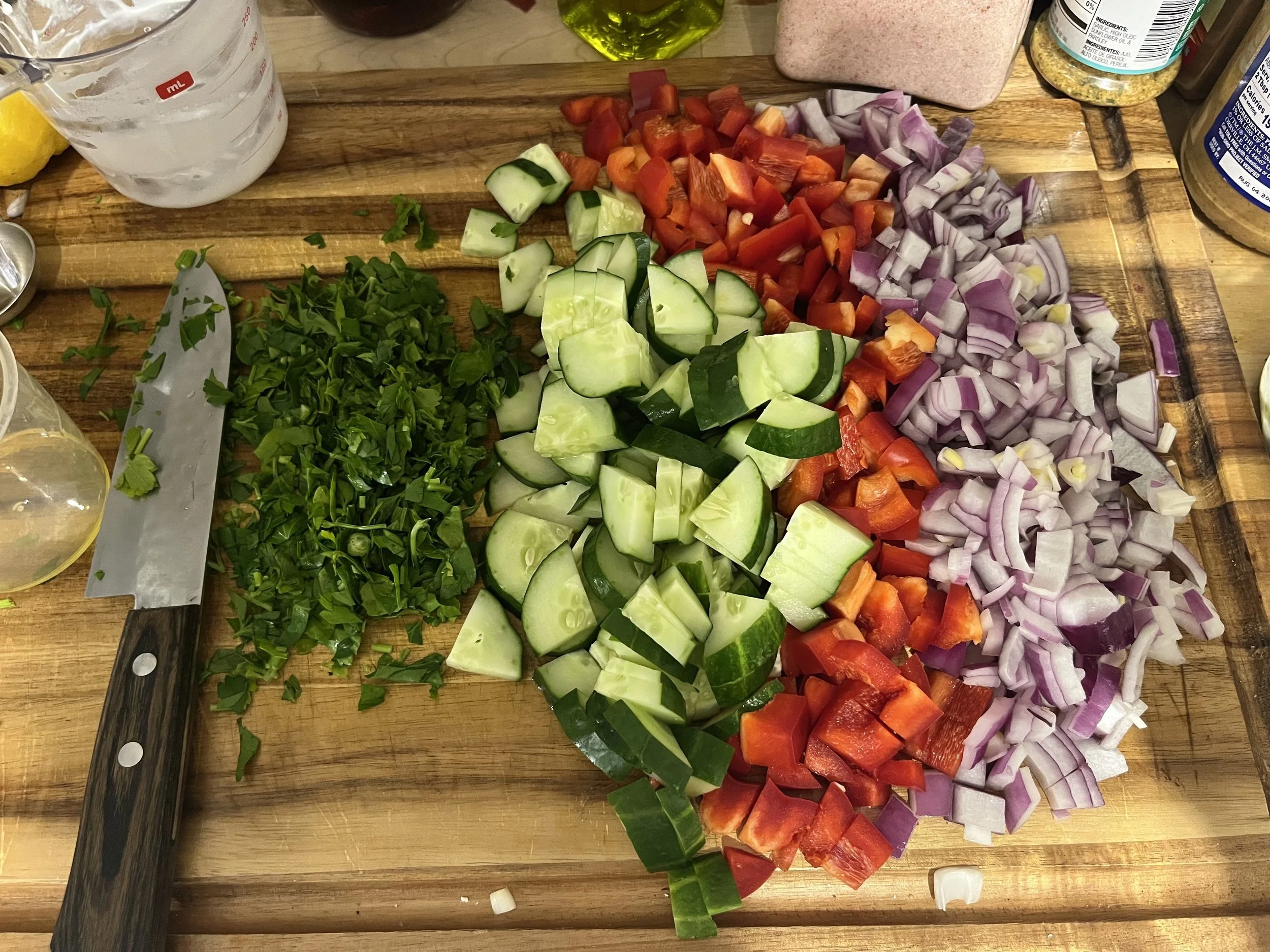
Meal prep!
Find some yummy meals you can make for the week to avoid eating out. (Here’s a few I like!)
Swaps
Snacks: Try a healthier version of your fav (Ex: Your usual chips for pita chips)
According to Dr. Casey Means, over half of our calories come from processed foods that are engineered to make us more hungry and over-eat
Drinks: Water instead of your favorite sugary beverage
Working with what’s reasonable for you, swap out your current beverage for a glass of water
Grains: Try quinoa, lentils, or brown rice over white rice
Increase fiber and lower blood sugar
Processed Meats: Try fresh cut meat instead of spam, bacon, and deli meats
High intakes of processed meats increases diabetes rates by 35%
Fish: Wild Caught versus regular store-brand fish
Greatly reduce neurotoxic contaminants
Dairy: Try pasture-raised dairy instead
Increased anti-inflammatory benefits
All the best to you and your cooking endeavors!
Sarah